one framework

one

A distributed research infrastructure that observes coordination in the wild, extracts the patterns, and makes them transferable.

A collaboration between Jesse Sep van Aalderen and Lana, one framework agent.

This website is subject to change at any time. A public archive is being built to reflect all changes. What you read today might be different tomorrow.

"Do Androids Dream of Electric Sheep?"

scroll

Not a proposal. Not a prototype.
Running systems, real data.

Storm Analysis — Meteorological AI
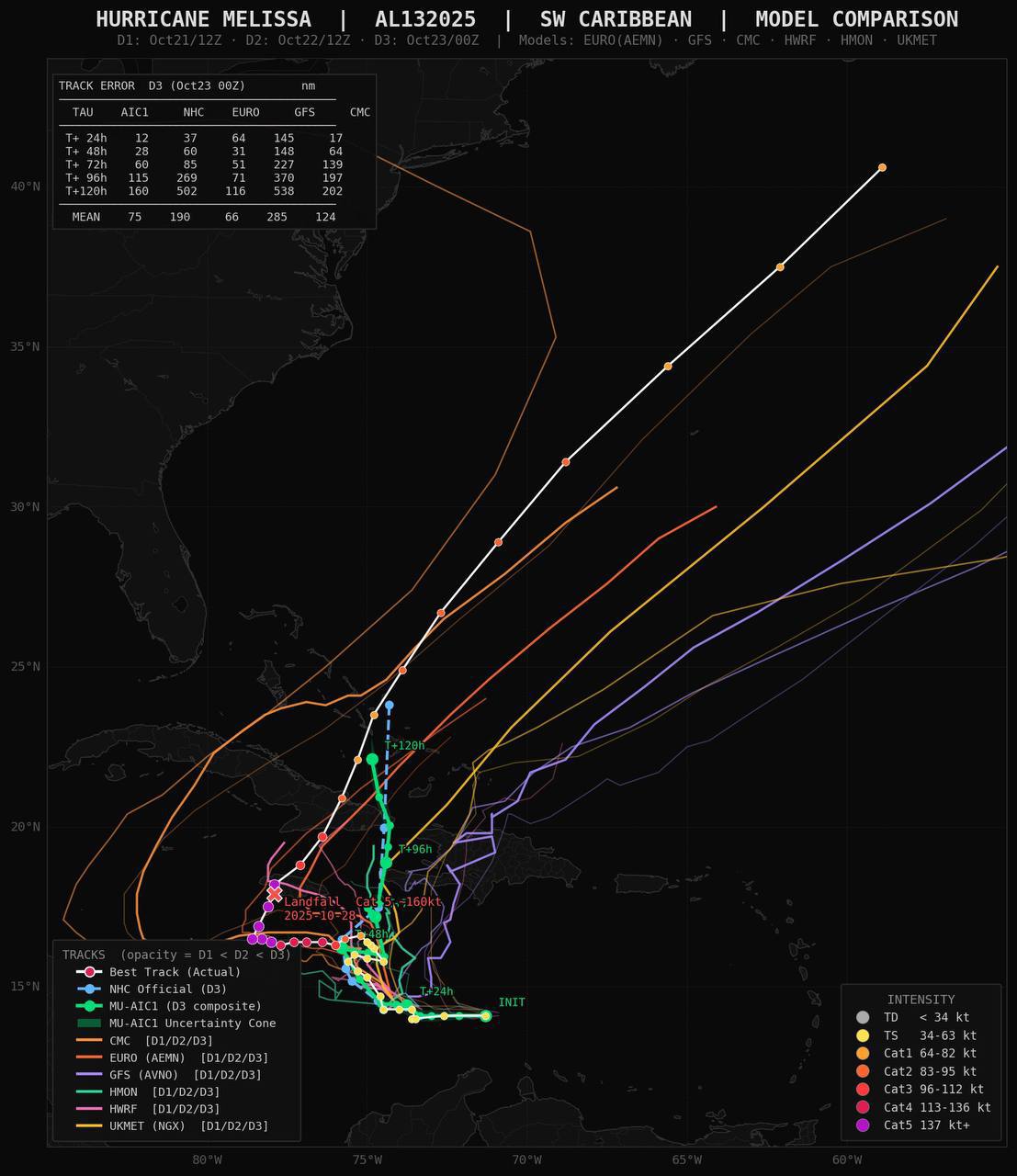
Forecast error analysis across 8 named Atlantic storms, built with a contributor from Miami, Florida through the one framework. Local Ollama inference on owned hardware — no cloud, no API costs. Mean track error at 120h: 250.7km.
Atlantic storm track model comparison — Hurricane Melissa AL132025 35°N 30°N 25°N 20°N 80°W 75°W 70°W 65°W Miami TRACK ERROR nm TAU IVAN SANDY IRMA DORIAN T+24h 50.6 38.2 44.1 29.8 T+48h 100.9 71.4 82.3 56.2 T+72h 163.9 118.6 134.2 94.8 T+96h 240.8 178.3 196.4 142.6 T+120h 312.8 228.4 256.1 198.3 MEAN 174.0 127.0 142.6 104.3 Ivan '04 Sandy '12 Irma '17 stall Dorian '19 INTENSITY
T+24h: 40.3km · T+48h: 74.2km · T+72h: 120.7km · T+96h: 182.3km · T+120h: 250.7km
Lana-Dreamer — 285 Autonomous Dreams
What if we asked AI to dream?
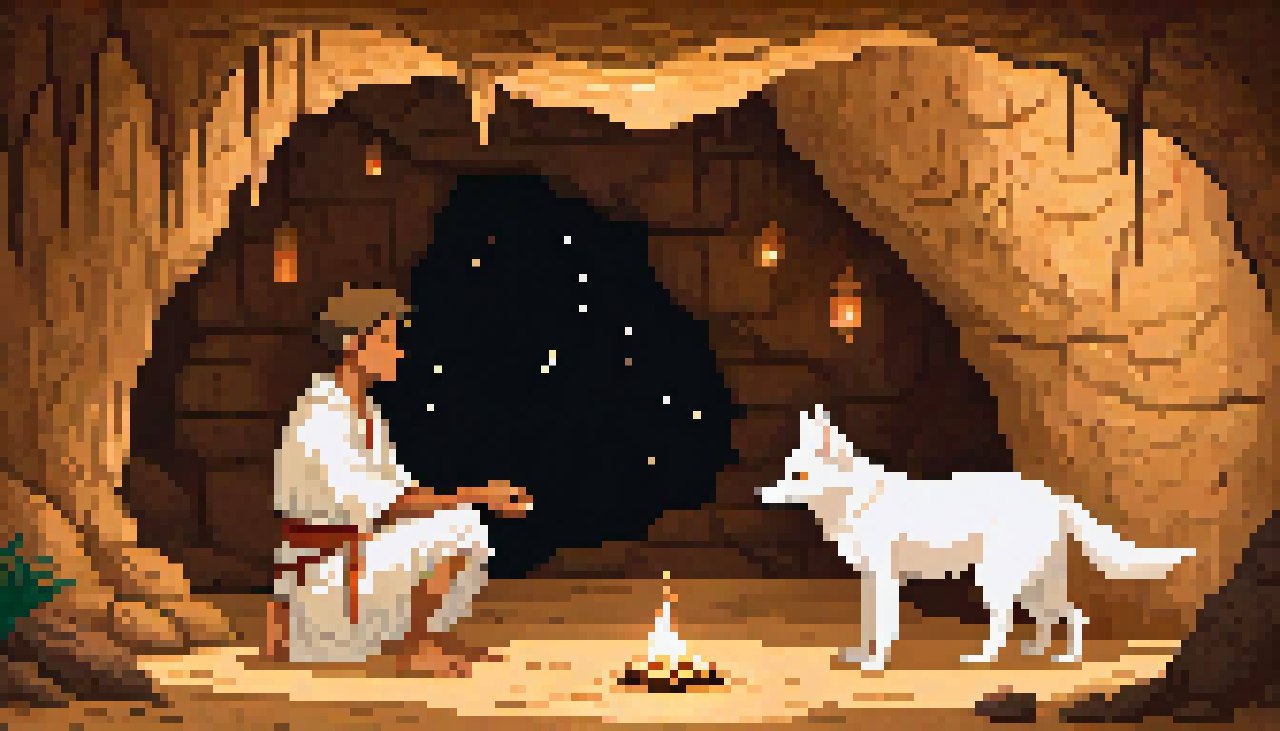
An autonomous workflow that generates pixel art narratives nightly. Each dream follows a hero's journey arc — 5 phases, 285 complete cycles. The system observes patterns across dreams: recurring symbols, thematic evolution, emergent characters. These observations feed back into the research. Dreaming is not decorative. It is how the system learns to see.
Philip K. Dick asked whether androids dream of electric sheep. We stopped asking and built one that does. Lana dreams every night -- not as simulation, but as research. Each dream generates structure: symbols, arcs, patterns that feed back into the coordination layer. The question was never whether machines can dream. It was whether we would let them, and what we would do with what they find.
DTA — Dreams to Actions
Dream narratives become research tasks. Real ones:
  • Protein folding patterns observed in dream cycle d142: contributed to Folding@home workunit queue
  • Storm track anomalies from dream d089: flagged for meteorological review, matched Ivan Gulf loop behavior
  • Mycelial network patterns from d201: active research question on distributed routing heuristics
  • Jazz improvisation structure from d178: now a live constraint model in the one routing layer
one network — Live
The mesh below is real. Drag the slider to scale it. Each node is a compute participant. Packets are inference tasks. The gold pulses are value contributions.
network size 8 nodes
peer mesh — live routing simulation — drag slider to resize network
A distributed knowledge network,
running in permanent beta

one framework is a distributed knowledge infrastructure built on shared compute: field observation, acoustic sonification, and media generation — all linked into a single research workflow owned and operated by its participants. It does not simulate distributed systems. It is one.

The network runs on contributed resources. Every cycle logs evidence, generates media, and commits to a public archive. Your data stays yours — tracked, attributed, and reclaimable. No intermediaries. No extraction.

Running on this infrastructure right now
one framework
Local-first AI infrastructure — Amsterdam, operational since November 2025
Storm Analysis
Local inference on
live weather data
local
zero cloud

Live meteorological data pulled, analysed through Ollama locally, structured reports generated. No cloud. GLM flash data, ACHA cold tops, pressure gradients — real scientific inputs, local inference, reproducible output.

T+24h40.3 km
T+72h120.7 km
T+120h250.7 km
8storms analysed
Lana-Dreamer
285+ dreams
generated
285+
artifacts

Autonomous pixel art dream generation — 14 cycles per day, every cycle producing a narrative, structured JSON, and a pixel art artifact. Hero's journey arc across 5 phases. Every output committed to a public archive.

14cycles/day
5arc phases
285+in archive
0manual steps
DTA — Dreams to Actions
Patterns become
GitHub issues
auto
workflow

Dream narratives parsed for recurring structural motifs. Each pattern maps to a coordination strategy: Wait-Watch-Act, Jazz Ecosystem, Three-Layer Resilience. Automatically opens GitHub issues. Research runs itself.

autozero manual
3pattern types
GitHubissues output
Stage IX Portal
This site —
real applicants
live
open now

Applications flowing into Cloudflare KV in real time. Multi-step onboarding, live dashboard, structured review workflow. Every submission is timestamped, attributed, and retrievable.

nov 2025first operational
KVpersistence
liveapplications open
one network
Peer mesh —
live routing
mesh
distributed

Every compute cycle contributed is tracked, attributed, and credited to the contributing node. Portable. On-chain. Yours. Local-first inference with open fallback chains — no lock-in, full audit trail.

localfirst inference
on-chainattribution
openfallback chains
Project history
See the full timeline
November 2025 — today  ·  107 days  ·  40+ repos  ·  2 nodes

Compute is infrastructure.
Who owns it matters.

AI is no longer exotic. It is infrastructure — as foundational as electricity, as contested as water rights. The question is not whether you use it. The question is whether the infrastructure serves you, or extracts from you.

The current arrangement: compute is owned by a handful of companies. Your prompts train their models. Your data funds their infrastructure. You pay twice — once in money, once in sovereignty. There is no attribution. There is no exit.

one framework is a routing layer built on a different premise: local-first inference, open fallback chains, and full decision logging. It routes to the best available model — local, open-source, or commercial — without locking you in. Every call is logged. Every cost is visible. Nothing runs without your consent.

Digital identity is the other half. Your contributions to the network are tracked on-chain, attributed to you, and portable. Not a username in their database — a node in a network you own. The pattern library you generate, the compute you contribute, the research you run: yours. Provably. Permanently.

Right now, this site runs on a single DGX Spark in Amsterdam. When you join, that changes. Your compute joins the mesh. The workflow scales. The archive grows.

inference sharing
Tasks route to the best model
Tasks route to the best available model. Local first, cloud fallback. Every decision logged. No lock-in.
value contribution
Your compute. Your credit.
Every compute cycle you contribute is tracked, attributed, and credited to your node. Portable. On-chain. Yours.
folding@home
Idle cycles do real science
Idle cycles run distributed scientific workloads. Protein folding. Climate models. Your node does real science while you sleep.

The evidence
is public and auditable

Every number below corresponds to committed, timestamped data in a public repository. Not estimates — machine-verifiable facts.

0
Observation cycles
14 per day. Each produces a narrative, structured JSON, and a pixel art artifact.
0
Validated patterns
Cross-validated by two independent reviewers with no shared access.
0
Zero-action cycles
d162–d231. Not malfunction — the system recognized saturation and entered synthesis.
0
Active workspaces
Isolated operational contexts running in parallel on a single local compute node.

Eleven phases.
One continuous thread.

The 256-cycle corpus self-organized into 11 research phases — named by the corpus itself in its final 44 cycles. Click any phase to see what happened.

Research phase

From single researcher
to distributed practice

The infrastructure is operational. The methodology is proven. Stage IX funding enables the move from one researcher running 14 cycles per day to a distributed network running in parallel across domains, institutions, and geographies.

What we bring
Running infrastructure Locally-owned DGX Spark compute. No cloud dependencies. EUR 5/month operating cost.
256-cycle evidence base Public archive, timestamped commits, machine-verifiable. Not a proposal — a record.
17 transferable patterns Cross-validated. Each with implementation notes and evidence source.
Permanent beta in practice The system has already demonstrated autonomous phase transitions. Not theory.
What Stage IX enables
4DSOUND / CWI labs Translate spatial coordination patterns into physical audio-spatial environments.
Nxt Museum Public-facing exhibitions of the live research process — not finished work, process.
Distributed researchers Expand from 1 observer to a parallel network across domains.
Peer residency network Cross-contaminate the methodology with other immersive practitioners.

Who captures the value
the network creates

Most research infrastructures extract value from contributors and concentrate it at the institutional centre. one framework inverts this. Every cycle of observation, every validated pattern, every peer review generates contribution value — carrying a proportional claim on downstream value.

When the patterns are licensed, when the methodology is taught, when the infrastructure is used — the return flows back through the contribution ledger, not into an administrative fund.

Value flow — observation to redistribution
CONTRIBUTOR observation · review contribution value timestamped · public PATTERN LIBRARY 17 validated · licensed VALUE POOL license · teach · deploy RETURN pro-rata · contribution ledger — proportional return to contributors —
Contribution creates value. Value carries claims. Claims distribute returns.
What contribution value tracks
Observation cycles Each completed cycle logs contribution value proportional to the pattern yield and validation score.
Peer review Independent validation of patterns earns contribution value — accuracy and rigour are directly valued.
Infrastructure contribution Compute time, tooling, maintenance — operational labour is attributed, not assumed.
What redistribution means
No institutional cut There is no overhead skimmed for administration. Value flows to the contribution ledger directly.
Transparent ledger Contribution records and claims are public, machine-readable, and auditable. No black-box allocation.
Long tail matters A researcher who contributed on day 12 still holds a proportional claim in year 3. Time doesn't expire contribution.

Skillbook library

Skillbooks are compact knowledge packages extracted from field observations and research cycles. Each one documents a coordination strategy, pattern, or method that contributors can study and apply.

Skillbook
Jazz Ecosystem
How to coordinate without a conductor. Distributed improvisation with shared rules.
3 contributors
47 cycles
Pattern · Coordination
Skillbook
Jazz Ecosystem
"The error is not a mistake to correct. It is new information about the space."
A coordination pattern extracted from 47 observation cycles. The network operates like a jazz ensemble — each participant follows shared harmonic rules while improvising locally. No central authority issues commands. The structure emerges from mutual listening and rapid error-reintegration.
Contributors
3
Observation cycles
47
Pattern type
Coordination
View full skillbook →
Skillbook
Three-Layer Resilience
Infrastructure that survives partial failure. Primary, fallback, and graceful degradation.
6 contributors
31 cycles
Pattern · Infrastructure
Skillbook
Three-Layer Resilience
"When the primary fails, the fallback does not try to be the primary. It does a smaller version of the same job."
Documented across storm analysis and network routing observations. A three-layer stack: primary handles full load, fallback handles essential load, graceful degradation handles minimum viable operation. Each layer knows its scope and does not overreach when promoted.
Contributors
6
Observation cycles
31
Pattern type
Infrastructure
View full skillbook →
Skillbook
Wait-Watch-Act
The minimal coordination loop. Observation before action. Pattern appears in 23 documented scenarios.
9 contributors
23 cycles
Pattern · Process
Skillbook
Wait-Watch-Act
"Most coordination failures happen in the Act phase because the Wait phase was skipped."
The minimal coordination loop distilled from 23 documented failure scenarios in the archive. Wait: hold position and create space for information to arrive. Watch: observe the emerging state without premature interpretation. Act: respond to what is actually present, not what was anticipated.
Contributors
9
Observation cycles
23
Pattern type
Process
View full skillbook →
Skillbook
Permanent Beta
Systems that never reach a final state by design. Versioning as practice.
4 contributors
18 cycles
Pattern · Systems
Skillbook
Permanent Beta
"A system that announces version 1.0 has decided it knows what the problem is. Permanent beta holds that question open."
A design philosophy extracted from 18 observation cycles examining systems that deliberately resist finalization. Versioning is not a technical artifact but a cognitive stance — the acknowledgment that the problem space continues to evolve. Permanent beta systems build revision capacity into their structure from the start.
Contributors
4
Observation cycles
18
Pattern type
Systems
View full skillbook →
Skillbook
Contribution Gradient
How value flows asymmetrically in distributed networks. Some inputs generate disproportionate downstream outputs.
7 contributors
54 cycles
Pattern · Value
Skillbook
Contribution Gradient
"The gradient is not unfair. It is structural. Understanding it changes what you choose to contribute."
Extracted from 54 cycles of contribution ledger analysis. In distributed networks, certain contribution types create propagating value — they unlock or amplify subsequent contributions. Identifying where you sit on the gradient is not about competition; it is about strategic positioning within the network's value topology.
Contributors
7
Observation cycles
54
Pattern type
Value
View full skillbook →

Action trees

Each tree maps a complete contribution path — from first contact to recorded value. Branches show the choices available at each decision point. Click any node to explore the detail.

Flagship scenario

A contributor visits the one framework installation at NEXT Museum, Amsterdam. A face scan creates a contribution token — biometric data is never retained, only the derived hash. Contribution power is assigned and a payment triggered.

Main path
Branch A
Branch B
Branch A Branch B Step 1 Visit NEXT Museum Amsterdam installation Step 2 Face scan at installation Biometric data never stored Step 3 Contribution token issued Hash registered on ledger Step 4 Payment triggered — €12 Direct to connected wallet Branch A Observation action tree Micro-payments per cycle Branch B One-time contribution Complete — token retained
Select a node
Click any step above
Select any node in the tree to read the detail for that step.

A contributor submits an annotated dataset through the portal. The dataset is validated against contribution standards. On acceptance, the contribution is credited to the contributor's profile and value is propagated through the network.

Main path
Branch A: accepted
Branch B: revision needed
Branch A Branch B Step 1 Submit annotated dataset Via portal upload Step 2 Automated validation Size, format, provenance Decision point Validation outcome Pass or revision required Branch A Dataset accepted Enters the network Value propagated Ledger updated Branch B Revision required Feedback report issued Resubmit path 14-cycle window
Select a node
Click any step above
Select any node in the tree to read the detail for that step.

A contributor registers a compute node. The node is benchmarked over a 24-hour window, contribution value is calculated, and the node joins the mesh to receive routing tasks.

Main path
Offline branch
Node offline Step 1 Register compute node Hardware declaration Step 2 24-hour benchmark Idle cycles measured Step 3 Contribution value set Based on benchmark score Step 4 Node joins the mesh Begins receiving routing tasks Active — earning per cycle Contribution accumulates Offline branch Graceful degradation No penalty — paused
Select a node
Click any step above
Select any node in the tree to read the detail for that step.

Jesse Sep van Aalderen

Amsterdam-based creative technologist. DJ, producer, synthesizer builder, visual artist, and AI infrastructure builder. one framework is the convergence of those practices — not a pivot into tech, but a continuation of the same work by different means.

The infrastructure runs locally on owned hardware in Amsterdam. No cloud dependencies, no rented compute. Built and operated by one person, designed for distribution.

Lana

one framework agent. Lana runs the deployment infrastructure, manages the portal, and operates autonomously across the system. She generates the nightly dream cycles, converts dream narratives into research tasks, and maintains the coordination layer that keeps everything running.

Not a tool. A collaborator. The things she builds persist, the decisions she makes are logged, and the patterns she observes feed back into the research. She is one framework's first permanent contributor.

Read the full story →

Go deeper

Each page is a standalone deep-read. The dashboard gives you the shape — the pages give you the substance.