What this page is about
What we built: one framework is a research infrastructure that spent 256 automated cycles observing how coordination works in the real world -- in factories, forests, villages, and weather systems -- and extracting the underlying patterns into a transferable library.
Why it matters for Stage IX: Stage IX is a Dutch cultural funding programme that supports work operating in permanent beta -- ongoing research that does not produce a single finished product, but continuously generates knowledge and keeps itself in motion. one framework is exactly that: it does not conclude, it iterates.
How Stage IX resources would be used: Funding would allow the single-researcher operation to expand into a small distributed network -- bringing in collaborators across domains, contributing compute capacity, and running the methodology in parallel rather than in sequence.
How it proves permanent beta: The system ran 256 observation cycles autonomously, including 84 consecutive cycles that produced no actions -- not because it failed, but because it had reached a saturation state and shifted into synthesis. That behaviour was not programmed. It emerged. That is permanent beta: a system that keeps running and keeps changing without requiring a fixed endpoint.
Distributed coordination,
made transferable
one framework is a distributed research and coordination infrastructure. It does not invent distributed systems. It observes where they already exist, documents the patterns, and makes them transferable across domains. Factory floors, forest ecosystems, village coordination, and atmospheric weather systems run the same coordination pattern. one framework makes that visible.
The central claim is structural: the same algorithm appears at every scale and in every substrate. Once you can name it, you can move it. Once it is documented, anyone can use it.
Same coordination algorithm. Different substrate. Structurally equivalent at every site.
The four-site circuit
The research methodology uses a circuit of four site types: factory (industrial coordination), forest (ecological emergence), village (community practice), and harbor (maritime exchange). Each site type reveals the same pattern in a different substrate. A factory floor and a forest edge are structurally equivalent -- both are systems where distributed agents coordinate without central instruction, using shared signals and local feedback.
The key methodological insight is repetition. Returning to the same site types across 256 cycles reveals structural depth that single visits cannot access. Factory at cycle d105 was richer than factory at d071 -- not because the factory changed, but because the observer had accumulated context. The circuit is not a sample. It is a research instrument.
What was built
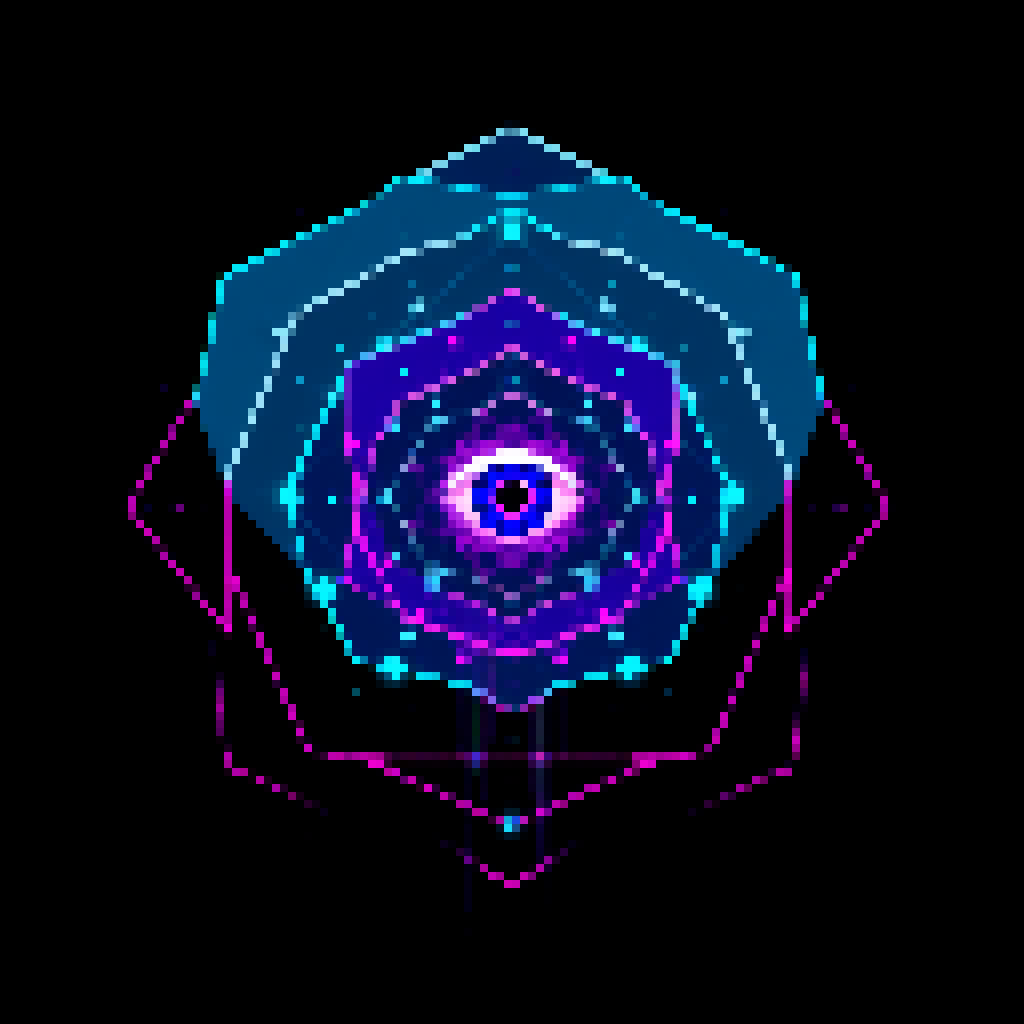
An autonomous research system running 14 observation cycles per day. Each cycle produces three outputs: a field observation narrative (300-500 words), a structured JSON extract containing actions, patterns, ideas, and decisions, and a pixel art artifact generated by a locally-run image model. All 256 cycles and their artifacts are publicly archived.
The workflow runs without human intervention for content generation. A schedule trigger fires 14 times per day. The local language model generates the narrative. A second extraction pass produces the structured JSON. The image model renders the pixel art. The archive commits automatically. The public gallery updates.
What it proved
Between cycles d162 and d231, the system produced 84 consecutive observation cycles with empty action arrays. Every extract.json file from that period has zero items in the actions field. The system did not malfunction. It entered synthesis mode -- a state where the corpus had accumulated enough observation that no new actions were required, only integration and transmission.
This transition was not programmed. It was not instructed. The infrastructure recognized its own completion and shifted into a different operational mode. The evidence is machine-verifiable: every extract.json file is committed to a public repository with timestamps. The archive does not require trust. It requires a terminal and a browser.
Not malfunction. Recognized completion.
Infrastructure
The system runs on locally-owned DGX Spark compute in Amsterdam. Core workflows, image generation, and data storage run without cloud dependencies. AI inference for language routing currently uses cloud APIs as an interim measure -- the research grant funds the transition to distributed local inference across the contributor network. The hardware is owned outright, not rented. Operating cost is under EUR 5 per month in electricity, excluding cloud inference.
When the workflow is idle, the GPU contributes cycles to Folding@Home -- a distributed protein structure research project. The compute is not wasted between observation cycles. It does useful scientific work.
Sample output
Every observation cycle produces three artifacts. Below is an example from cycle d001.
{
  "cycle": "d001-s",
  "patterns": ["fractal-self-reference", "recursive-observation"],
  "actions": ["name-the-meta-layer", "document-workspace-topology"],
  "ideas": ["workspaces-as-neurons"],
  "decisions": []
}